· blog · 3 min read
The Family Office Communication Playbook: Using Interactive Visuals to Connect With Multi-Generational Stakeholders
As wealth transitions from one generation to the next, decision-making becomes more complex and expectations for transparency, engagement, and digital fluency continue to rise. The next generation of stakeholders is not only more technology savvy but also expects data to be visual, interactive, and easy to understand.

Family offices face a unique communication challenge. As wealth transitions from one generation to the next, decision-making becomes more complex and expectations for transparency, engagement, and digital fluency continue to rise. The next generation of stakeholders is not only more technology savvy but also expects data to be visual, interactive, and easy to understand.
In this evolving landscape, interactive visuals have become a powerful bridge between tradition and innovation, helping family offices engage across generations while maintaining clarity, alignment, and trust.
The Challenge of Multi-Generational Engagement
Each generation views wealth and legacy differently. Founders often prioritize stability, preservation, and governance. Their successors may emphasize purpose, sustainability, and digital accessibility. These differences can create disconnects if communication remains static or overly technical.
According to a recent UBS report, more than 60% of family wealth transfers fail because of communication breakdowns or a lack of transparency. The message is clear: communication is not just a soft skill; it is a strategic imperative.
Why Interactive Visuals Work
Data alone rarely inspires understanding or trust. Visual storytelling, on the other hand, transforms complex financial information into actionable insight. Dashboards, scenario simulations, and performance visuals make wealth management more transparent and collaborative.
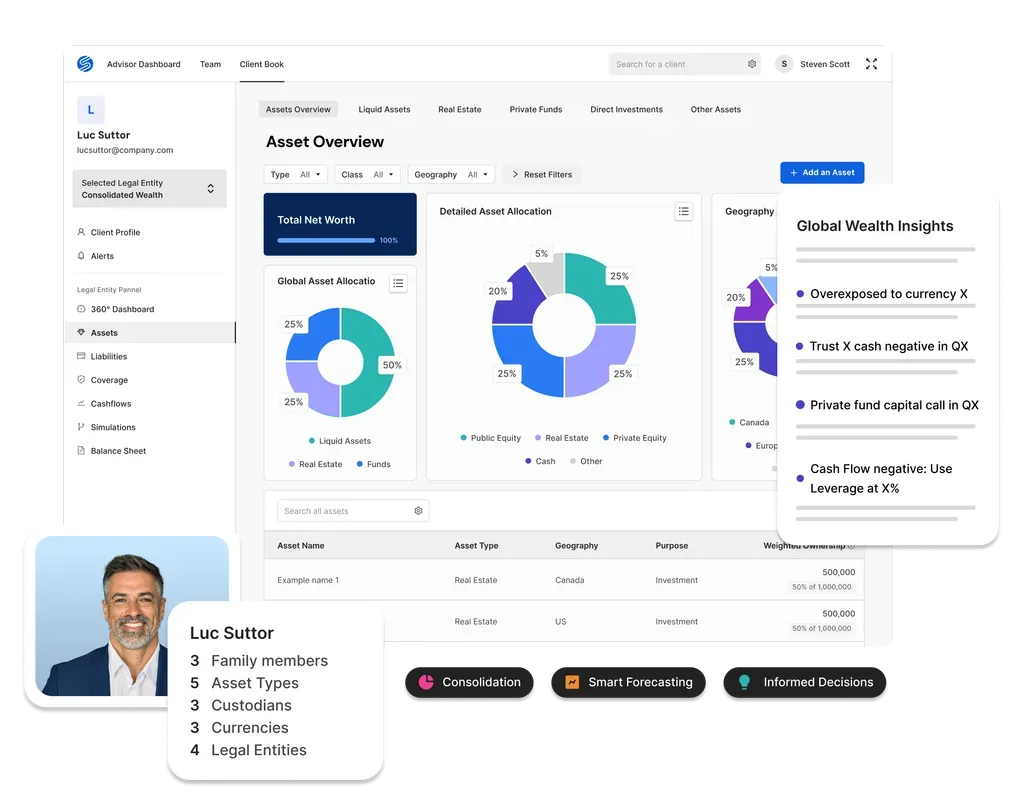
Interactive visuals enable stakeholders to explore their wealth story dynamically, testing how investment decisions impact long-term goals or how philanthropy strategies align with family values. When clients can visualize outcomes rather than interpret spreadsheets, engagement deepens and alignment strengthens.
Building a Shared Understanding
The goal is not just to display data but to design experiences that foster participation. For family offices, this means creating visual narratives that adapt to each generation’s communication style.
For founders, clarity, structure, and reporting accuracy remain key.
For next-generation members, real-time analytics drive engagement.
For advisors, integrated dashboards enable better collaboration and proactive decision-making.
This shared visual language helps families move beyond abstract numbers toward shared purpose, allowing each generation to feel both informed and involved.
Technology as a Bridge, Not a Barrier
Modern wealth platforms like Sofistic.AI make this level of visualization possible by combining data aggregation, AI-driven insights, and user-friendly interfaces. However, technology should always enhance, not replace, human connection. The best family offices pair digital tools with personal dialogue, ensuring that insights lead to meaningful conversations and informed choices.
The Future of Family Office Communication
As family offices continue to evolve, communication will remain the cornerstone of effective governance. Interactive visuals are not just tools for presentation; they are instruments of alignment, education, and trust-building.
In an era defined by complexity and intergenerational transition, those who can visualize wealth clearly will be best equipped to preserve it together.